.png?rev=23f8ceeabf4545c492f213374ede56ae&extension=webp&hash=086EC7923BA248E98461715660579E3F)
Main Types of hearing loss

Main Types of hearing loss
What are the Three Types of Hearing Loss?
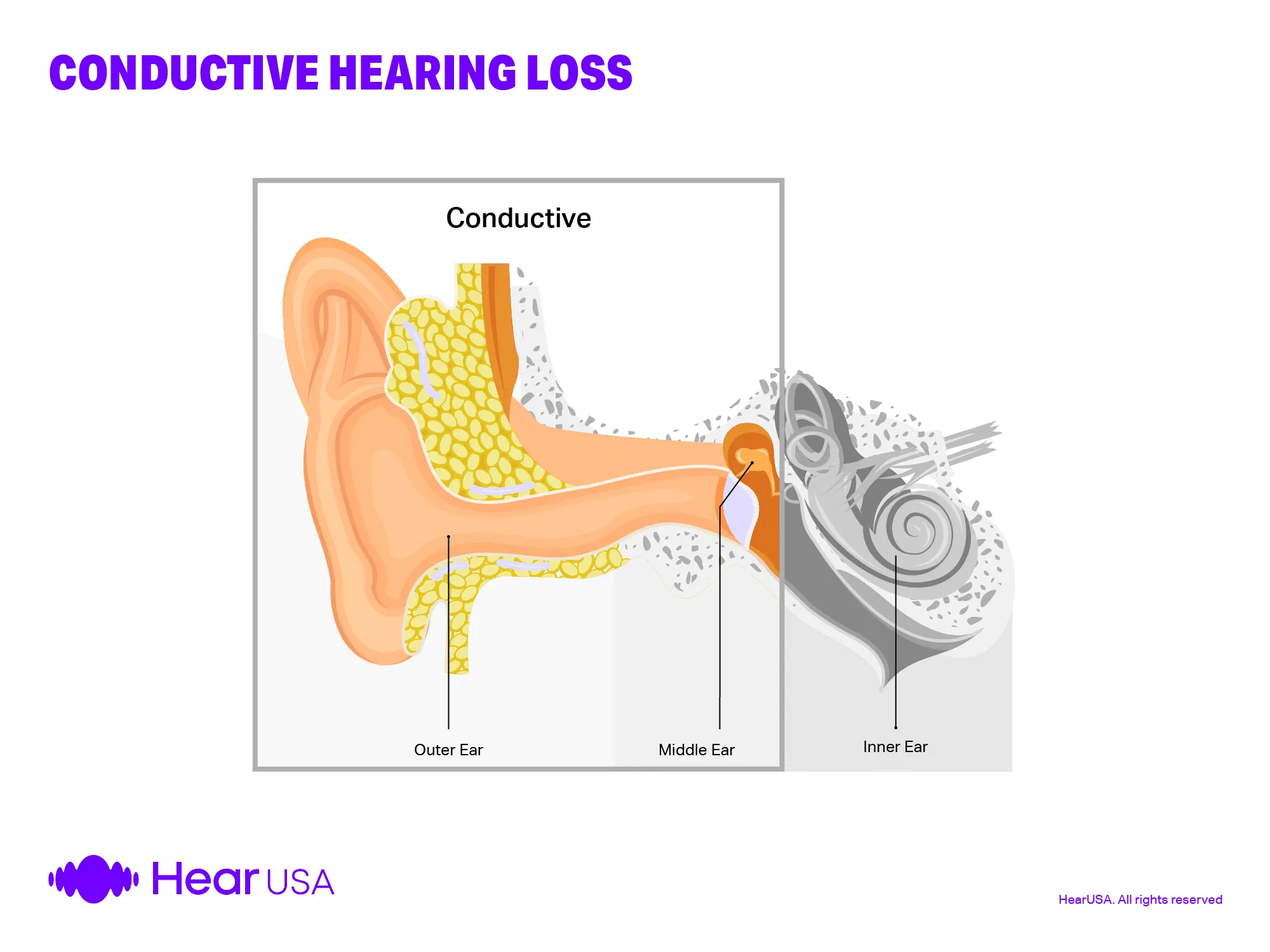
The ear is made up of three parts: the outer ear, the middle ear, and the inner ear. The outer ear refers to the entrance of the ear canal up to the eardrum. The middle ear refers to the space between the eardrum and the cochlea, and the inner ear refers to the part of the ear that holds the hearing organ (a.k.a. cochlea) including the auditory nerve.
There are also generally considered to be three types of hearing loss: sensorineural, conductive, and mixed.
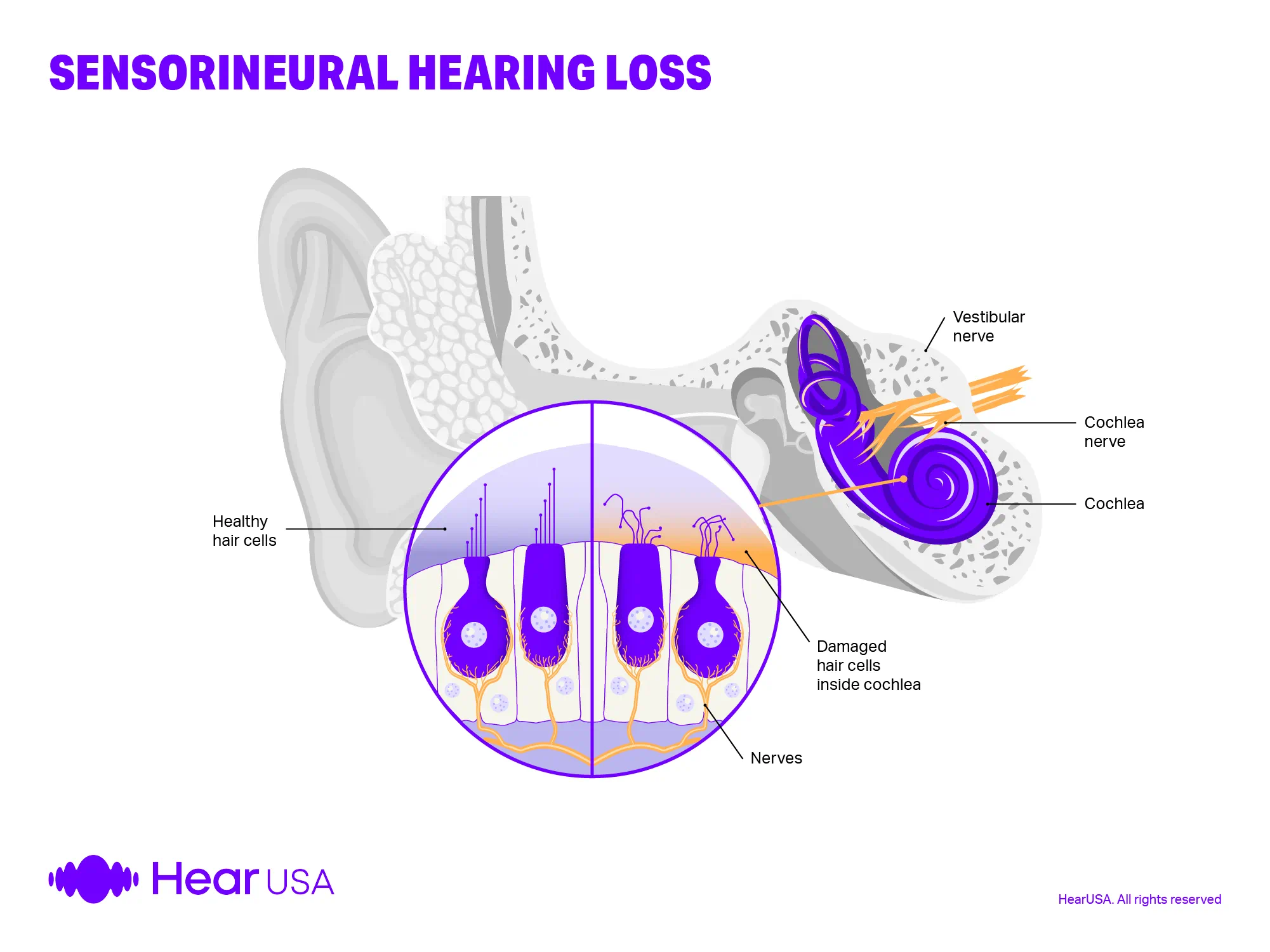
Sensorineural happens when important mechanisms in your inner ear become damaged.
Conductive happens when sound is blocked from passing through your outer and middle ear, so it can't get to your inner ear.
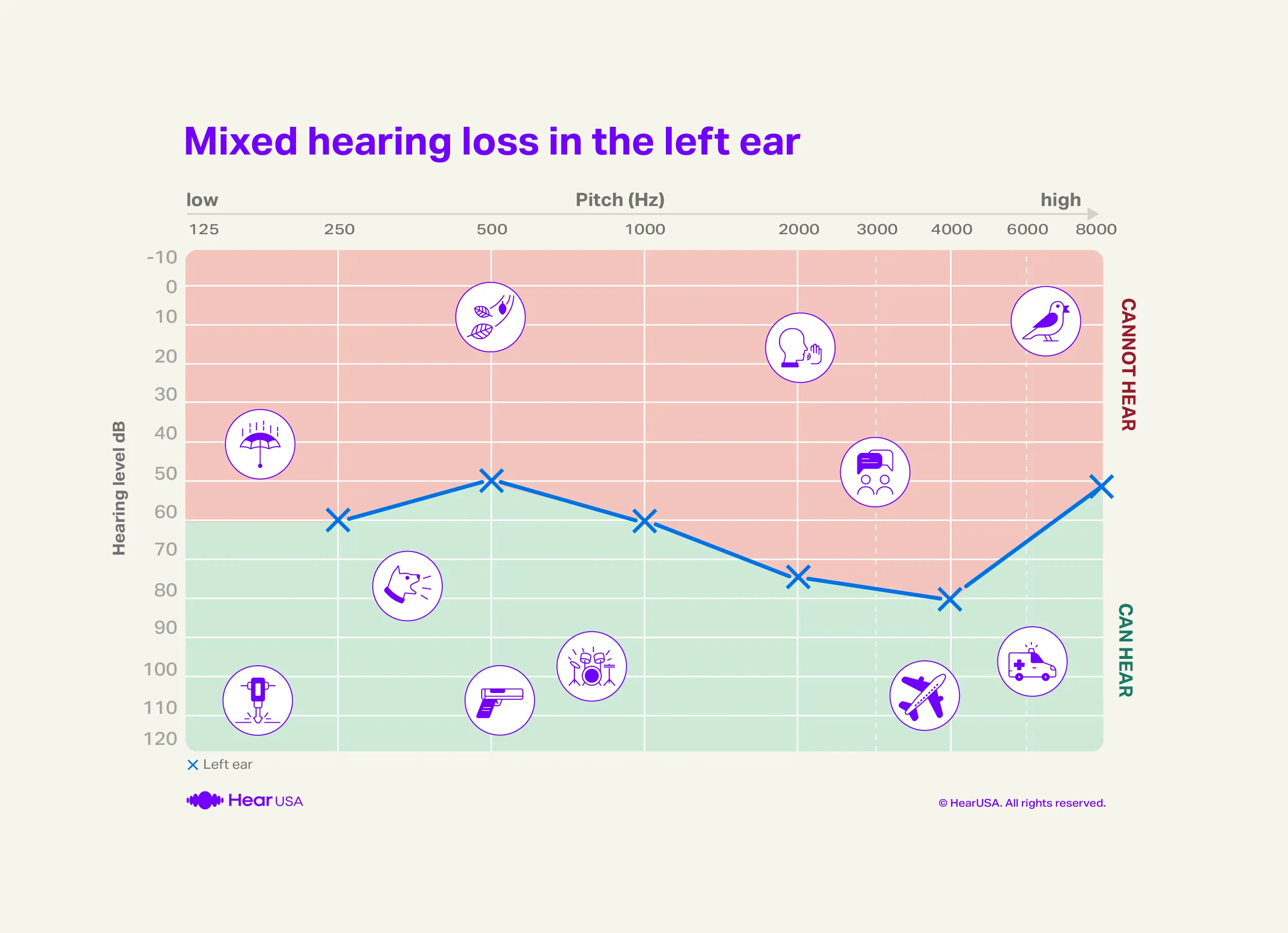
Mixed happens when you have a mix of both sensorineural and conductive symptoms.
Differentiating Sensorineural and Conductive Hearing Loss
Causes, Symptoms, and Treatments
There are fundamental differences between sensorineural and conductive hearing loss. This includes the underlying causes, typical signs and symptoms, and potential treatment options.
Sensorineural Hearing Loss
- Sensorineural hearing loss is caused by damage to the inner ear, including the hair cells and auditory nerve.
- Common symptoms include decreased sensitivity to sound. So you have to ask people to repeat what they just said and turn up the volume on TV and music players.
- Typically permanent, that's why the main treatment option for sensorineural hearing loss is using hearing aids. They are able to amplify and process sound to make up for the loss of your inner ear's ability to do it.
Conductive Hearing Loss
- Conductive hearing loss is due to blockages in your outer and middle ear, impeding sound from reaching your inner ear.
- Symptoms usually involve decreased hearing, a feeling of fullness in your ears, as if they are plugged, pain, and a bloody or fluid discharge coming from your ear.
- It can be permanent, but is often temporary. Treating the underlying health condition restores your hearing once the blockage clears. Treatments include medication for infections, surgery for blockage removal, and earwax removal.
Request an appointment in a centre close to you
Other Hearing Disorders
Other Hearing Disorders and Classifications
Aside from the three types of hearing loss, there are other hearing disorders and ways of classifying your hearing.
Congenital Hearing Loss
Congenital hearing loss refers to loss that is present in an infant at birth. It has causes and symptoms that fit under the three main types listed above.
The hearing loss in the baby may only be temporary. The underlying conditions that occurred during pregnancy and childbirth can be treated or may clear up on their own. As long as they go away, the baby’s hearing may develop as normal.
A newborn hearing screening can be performed at the hospital to identify potential issues. For more information, please refer to your provincial infant hearing screening program.
The hearing loss in the baby may only be temporary. The underlying conditions that occurred during pregnancy and childbirth can be treated or may clear up on their own. As long as they go away, the baby’s hearing may develop as normal.
A newborn hearing screening can be performed at the hospital to identify potential issues. For more information, please refer to your provincial infant hearing screening program.
Unilateral or Bilateral Hearing Loss
Unilateral and bilateral hearing loss refers to the ear, or ears, in which you have hearing loss.
Unilateral hearing loss means you have loss only in one ear, while your other ear is fine.
Bilateral hearing loss means you have loss in both ears. When you have bilateral hearing loss, you may have different levels of hearing loss in each ear.
Neither unilateral or bilateral hearing loss refer to the type, cause, symptoms, or treatment of hearing loss. You can have all three types in one or both ears. All it refers to is a categorization of whether it affects one or both ears.
Unilateral hearing loss means you have loss only in one ear, while your other ear is fine.
Bilateral hearing loss means you have loss in both ears. When you have bilateral hearing loss, you may have different levels of hearing loss in each ear.
Neither unilateral or bilateral hearing loss refer to the type, cause, symptoms, or treatment of hearing loss. You can have all three types in one or both ears. All it refers to is a categorization of whether it affects one or both ears.
Tinnitus
Tinnitus is a condition where you experience some kind of sound that is not coming from any external source.
The telltale sign of tinnitus is typically a ringing, hissing or buzzing sound. It is a common hearing disorder for adults to experience, and is often tied with sensorineural hearing loss.
You can decrease the severity of symptoms through special treatments including hearing aids. They help you mask tinnitus so you don’t notice it as much.
The telltale sign of tinnitus is typically a ringing, hissing or buzzing sound. It is a common hearing disorder for adults to experience, and is often tied with sensorineural hearing loss.
You can decrease the severity of symptoms through special treatments including hearing aids. They help you mask tinnitus so you don’t notice it as much.
Auditory Neuropathy Spectrum Disorder
Auditory Neuropathy Spectrum Disorder (ANSD) is a condition that affects your hearing, but does not involve hearing loss that originates from your ear.
It happens when sound waves successfully travel through your outer and middle ear, and are received by your inner ear. But there is an issue with the signal sent between the auditory nerve and the brain.
When you have ANSD, you may have your hearing tested and show no hearing loss at all. You may also show mild to severe hearing loss.
Someone with ANSD typically has an issue with understanding and processing speech. They may be able to hear general sounds just fine, but cannot recognize nuance within the sound — such as specific words as someone talks.
ANSD is a hearing disorder that cannot be treated like normal hearing loss. This is because the usual mechanisms for hearing are not affected. There is no blockage in your ear canal that would prevent sound from reaching your inner ear, and your inner ear is able to receive sound like normal.
It is purely an issue with how the sound is processed into a signal and sent to your brain. There is no consensus treatment for someone with ANSD, but you would need to see a specialist.

WHO'S AT RISK FOR HEARING LOSS?
Hearing loss can appear along with other health conditions. And while these may not directly cause hearing loss, studies have shown that symptoms such as reduced blood flow or medications used to treat primary diseases can negatively impact the auditory system.
Here are the most common comorbid (occurring at the same time) conditions:
Diabetes
Arthritis
Cardiovascular Disease
Balance Problems
Dementia
Depression

Don't miss a beat
Sign up for our newsletter to stay informed and learn more about protecting and improving your hearing health.